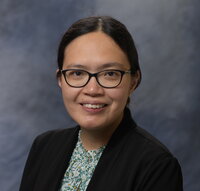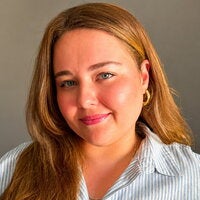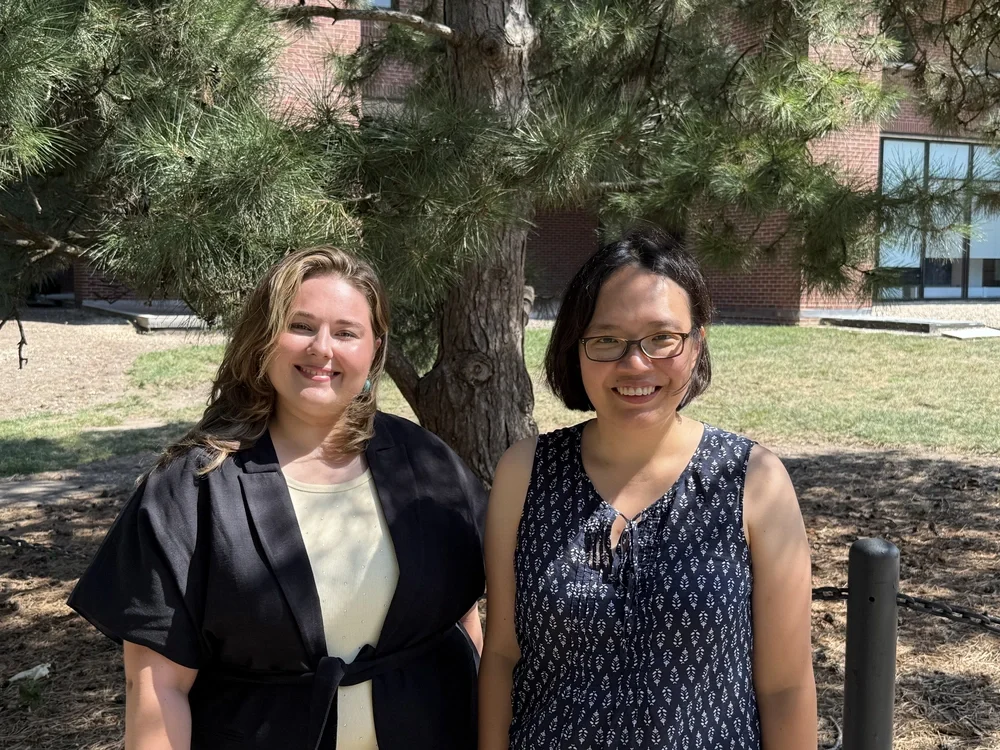
We sat down with Assistant Professor Anna Mendoza and Ph.D. student Elif Varlik to discuss a project that provides English and foundational literacy instruction for refugee women with limited prior formal education. Led by the Refugee Center in partnership with the University of Illinois Department of Linguistics, classes take place at the Central Illinois Mosque and combine daily instruction with access to literacy software and technology.
Anna Mendoza is an Assistant Professor of TESL and Sociolinguistics in the Department of Linguistics at the University of Illinois Urbana-Champaign.
Elif Varlik is a Ph.D. student in the Department of Linguistics at the University of Illinois Urbana-Champaign, with a concentration in Second Language Acquisition and Teacher Education.
Can you talk about the Refuge Center?
Mendoza – “The Refugee Center has served Champaign-Urbana for nearly 50 years. It helps immigrants, political asylees, and refugees regardless of country of origin with many aspects of resettlement, including housing, banking, finding employment, navigating the healthcare system, and citizenship and legal services.”
How did you get involved with the Refuge Center? How did you get into this area of volunteerism?
Mendoza – “I was assigned to teach EIL 512: MA TESOL practicum, a capstone course for MA TESOL students, in my first year at UIUC. I thought it would be good to partner with an off-campus institution to help English learners whose needs were not being met by the ESL classes available in our community: English learners with little to no alphabetic print literacy.”
“All the local ESL classes for adults such as those at Parkland College, the public library, and churches presuppose alphabetic print literacy. So anyone who settles in Chambana—such as people from Afghan or Guatemala—who have limited or interrupted formal education, cannot learn from those classes, even if they are free. I decided to read about LESLLA (Literacy and Second Language Learning for Adults) and the teaching of an additional language to pre-literate learners, and design the MA TESOL practicum around this population.”
“Many of our MA TESOL candidates are experienced ESL teachers, but not in this educational context. I hope it gives them transferable skills regarding foundational literacy instruction and strategies for teaching English beginners.”
Varlik – “My journey into volunteer teaching actually started in a classroom. In Spring 2024, I took EIL 512: MATESOL Practicum with Dr. Anna Mendoza, and that's where I began teaching ABCs alongside my co-teachers from the MATESL program.”
“When the course ended, I didn't want to stop. My husband, Cem Varlik, had been an ESL teacher back home in Türkiye, and he suggested we volunteer together. So that summer, the two of us started teaching women once a week at our local mosque for about a month, getting our footing. When fall came around, we kept going. We met with the women weekly throughout Fall 2024, focusing on beginner-level English and building vocabulary.”
“By Spring 2025, I continued the classes on my own while also taking on a new role as the Practicum class RA, which meant I got to sit in on and observe many of the classes taught by other MATESL students, learning from their approaches along the way.”
“That summer, I shifted my volunteer classes toward something more practical: computer literacy. I taught the women how to open and navigate a computer, and we worked extensively with typing.com to build keyboard skills, alongside an introduction to phonics.”
How does this work fill gaps in the field, or helps answer unaddressed questions within the field of applied linguistics?
Mendoza – “Although immigrants and refugees with limited formal education represent a high percentage of second language (L2) learners worldwide, they have remained a neglected group; little attention has been paid to them in applied linguistics research. Second Language Acquisition (SLA) theories may be too based on the SLA of higher educated, literate language learners, but can these people be assumed to be representative of all, or even most, L2 learners at a time of unprecedented global migration and displacement?”
“Learners with limited levels of print literacy and formal education show up in free adult language classes in their new countries, with the highest levels of motivation, and then they drop out because the classes are not designed for pre-literate learners. As Tarone et al. (2009) say in their book about these learners, ‘when ESL teachers have asked SLA scholars for research-based advice, the scholars have had little to say to them.’”
How do you plan to scale up this research moving forward in terms of public outreach?
Mendoza – “First we need to explain what it is we do. Our research longitudinally traces the development of a dozen Afghan women who are taking a year of intensive foundational literacy instruction (phonics and typing) with us at the Central Illinois Mosque on Lincoln and Springfield. About a third of them do so in tandem with beginner-to-intermediate speaking classes at the First Presbyterian Church, with people from many different countries. What we want to see is whether our foundational literacy instruction helps them to pick up English better, whether in instructed or naturalistic settings. I won’t go into the literature here, but there’s strong evidence that alphabetic print literacy is necessary to progress past beginner level in L2 because L2s need to be learned explicitly in adulthood. If you can’t represent the stream of oral speech in your head, using your transcription of it, you can’t mull over it enough to commit it to long term memory, make substitutions to create different utterances, or contrast two utterances to make sense of grammatical or pragmatic corrective feedback. Our research aims to figure out how to make students go from pre-literate English beginners to alphabetically literate English beginners, and we shadow the Presbyterian Church classes—which are very well received in town, always waitlisted—in terms of curriculum.”
“Side note: my teaching background was originally in shadow education, where afterschool classes/tutors “shadow” K-12 schooling to give learners an edge; this is very common in Asia and the Asian diaspora in North America, and I worked in shadow education throughout my 20s. It’s this big neoliberal industry, but it can be put to good use for a different population, and I have lots of direct experience on how effective it can be, which is why socioeconomically privileged people pay for it.”
“Anyway, what the Afghan learners are doing that week in the church ESL classes in terms of topical units (vocab and speaking), we review in the mosque ESL classes, with pre-literacy support. Then we have our own curriculum, which is intensive phonics and typing. And so to go back to scaling up the research, I’m working with Marisa Peacock in the College of Media who teaches a practicum in that department where students design ads for local businesses. In SP27, her students will design an ad for our courses, and I’m going to hire RAs who speak Dari and Q’anjob’al, and we can dub that ad and circulate it through WhatsApp in these communities. And then we can create a mini-documentary about our research, and if I get the funding from the Spencer Foundation, my colleague who directs the Chambana Refugee Center has national networks.”
“We can share our teaching approach through Switchboard, which is the app the Democratic and Independent parties use for fundraising. Ideally, eventually there would be all these Education and Linguistics departments across the U.S. partnering with their local churches, mosques, synagogues, and refugee centers where the ESL practicum students are providing the pre-literacy tutoring in the learners’ own safe spaces (their places of worship, where they are free to speak their first language in class) that shadows the regular adult ESL classes in town. This way, pre-literate immigrants are supported to remain in the classes (which are a different space that “force" them to practice English with people beyond their country, other immigrants with similar experiences), to acquire foundational literacy to progress beyond the beginner English level while integrating with the wider community. Intra-ethnic community language learning shadows inter-ethnic community language learning, to give people both sets of social support to learn the language.”
Who did you collaborate with outside of the linguistics department?
Mendoza – “Lisa Wilson, Sadia Rahman and Ashlyn Henke at the Champaign-Urbana Refugee Center; Bonnie Ward, Director of the ESL classes at the First Presbyterian Church; Brian Spencer, who designed our wonderful phonics app based on a curriculum that has taught thousands of people to read in the U.S. since the 1960s in community settings (spencerlearning.com); Marisa Peacock in the College of Media. The Community Academic Scholars program in the Interdisciplinary Health Sciences Institute (IHSI) at UIUC has given me three outstanding summer interns: Asal Amiri, Joel Diaz, and Zahra Ghadeer. We hope our networks keep growing, both at the local level and beyond.”
Varlik – “Fall 2025 brought the collaboration full circle in a new way. Cem was working on his thesis — an action research project on using Web 2.0 tools with LESLLA learners — and I joined him for eight weeks of teaching, alongside Eda Yildirimer, my peer, MATESL graduate of 2026. Around the same time, one of my own Turkish language students, Derya Asaner, a PhD student in the Mathematics department, began teaching numeracy skills to the women once a week.”
“Looking back, what strikes me most is how many people this work brought together over three years. This fall, I've come back to where it all started, as an RA on Dr. Mendoza's Ultimate Phonics project, continuing the same thread of literacy work that first brought me into this community.”
Did graduate students in the MATESL program contribute to this as well?
Mendoza – “Absolutely! We’ve had nearly 50 MA TESOL practicum teachers and volunteers teach these classes, and we have figured out many things through trial and error. I have used student feedback to improve the practicum course over time, more tailored to LESLLA learners and to provide more practical support and guidance for the teachers who work with them.”
What are some publications and awards that have arisen out of this work?
- Mendoza, A., Varlik, E., Yildirimer, E., Amiri, A., & Diaz, J. (2026). Teaching Reading to Afghan Women with Emergent Textual Literacy: A Plurilingual Approach. LESLLA Symposium Proceedings, 21(1). https://doi.org/10.5281/zenodo.19924750
Our LESLLA proceedings paper on the Summer 2025 project on plurilingual texts.
- Varlik, E., Yildirimer, E., & Varlik, C. (2026, March 12). Three paths, one community: Diverse research approaches and shared teaching experiences with refugee women. TESOL Refugee Concerns Newsletter. https://my.tesol.org/news/11483847
A reflective piece by me, Eda, and Cem where we shared our experiences teaching in adult literacy classrooms.
- Varlik, E. (2025). Virtual study sessions for adult literacy education teachers’ multilingual awareness. IDEALS. https://hdl.handle.net/2142/129962
My MATESOL thesis, where I conducted study sessions with three veteran adult literacy teachers over the course of six weeks. We explored topics on multilingual awareness of adult literacy learners, such as translanguaging, trauma-informed pedagogy, pleasure reading, identity texts, and other related topics.
Awards
2027 American Association for Applied Linguistics (AAAL) Distinguished Service and Engaged Research Graduate Student Award
2026 Champaign Immigrant Welcome Awards Student Leadership Award
You can read the News Gazette's story about this award here.